





 Add to Cart
 Comparison
The basics of systems of protection against eavesdropping. Search for bugs
In the modern business world, issues related to countering eavesdropping and recording of meetings, conversations in office premises, cars, during on – site negotiations, etc.are very relevant. To ensure the necessary level of protection and create security, a comprehensive approach is required, in particular: to block eavesdropping and recording devices, it is necessary to create two levels of protection-active and passive. This review is devoted to the basics of building these systems, the principles of their functioning. The main focus is on the equipment for searching for bugs in the room, since their timely detection is one of the most effective ways to ensure safety. Among those who need to buy a bug detector is vital, bankers, businessmen, military staff, as well as some government employees.
Types of anti-eavesdropping systems
There are two levels in the anti-listening system:
* Active protection, carried out through the use of special radio-electronic systems, which include: a device for searching for bugs – the so-called bug detector, a recorder and microphone blocker, a device for encrypting telephone conversations, a device for blocking cellular communications, etc.; • Passive protection, which provides for a set of measures to implement sound insulation of premises and buildings.
In the context of ensuring the preservation of confidentiality, it is necessary to highlight the search for bugs as a method of active protection, while using it it becomes possible to constantly monitor listening attempts, and when they are detected, respond quickly or, without disabling the found device, think about the possibility of misinformation with the appropriate benefit. This is already a different level, related to systems of countermeasures, and therefore it does not make sense to dwell on it in detail in this article.
Means of providing passive protection
The sound insulation system, which makes it impossible to listen to the premises, is based on three main points:
* Installation of special structures that reflect the sound wave;
* Installation of sound-absorbing systems;
• The design of the devices, the scattering of the sound wave.
Through the use and competent design of passive listening protection systems, you can get an effective result, in which it will be almost impossible to listen to the interior without special technical devices.
The main disadvantage of passive protection is the inability to counteract the listening devices installed inside the room. To counteract them, an active security system is created, and to detect eavesdropping devices, a special device is used to search for bugs.
Basic means of providing active protection
By means of active protection means: * Blockers of voice recorders and microphones;
• Device for detecting listening attempts, such as bug detection equipment;
* Special encoders for telephone conversations;
* Detectors of attempts to remove the sound signal from the window panes with special laser devices;
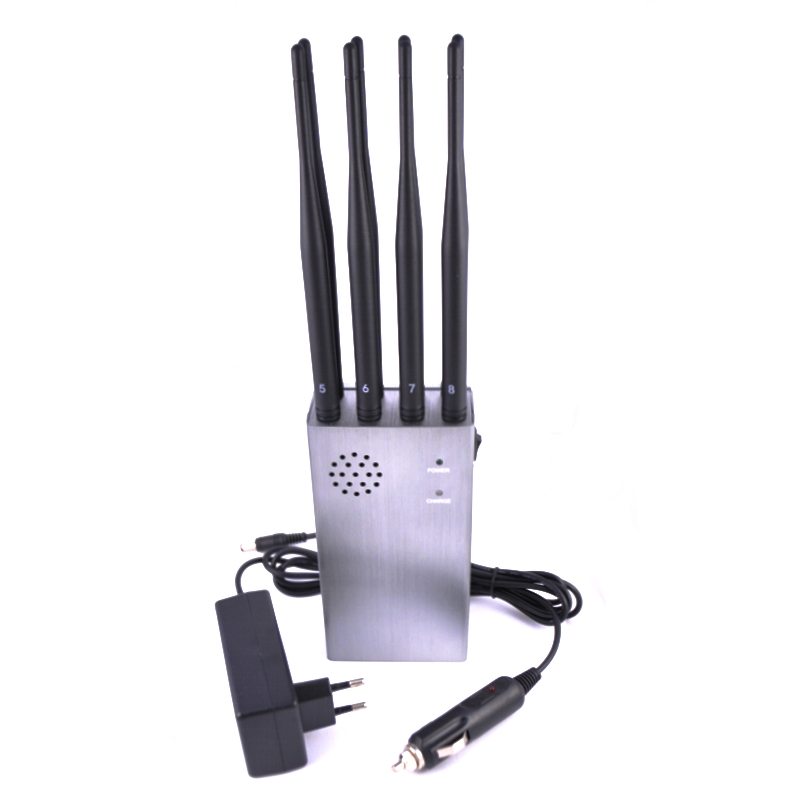
• Cellular communication equipment blockers;
* Other systems and devices that allow you to detect and block all means of listening and recording sound waves inside the premises.
Microphone and voice recorder blockers work on the principle of placing noise interference in the radio range, either acoustic, in the audible sound range – the so-called "white noise", or in the form of ultrasonic waves.
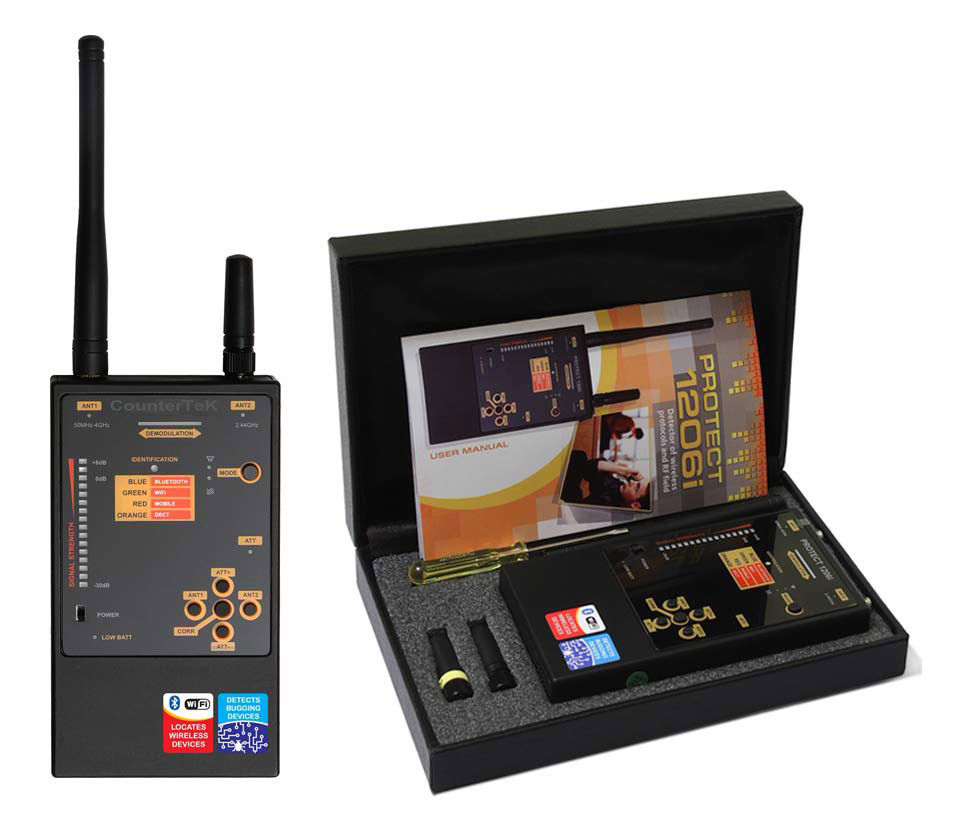
Special equipment for searching for bugs is a detector that allows you to detect special devices that transmit sound and (or) image hidden inside the room. Later in the article, the hidden bug detector will be discussed in more detail.
To prevent attempts to listen to telephone lines, special encoders are installed that convert the original signal and make it impossible to listen to it without a decryption system.
The sound wave, in its essence, is the vibrations of the mass of air inside the premises, and these vibrations are transmitted to the windows and walls of the building. Special devices can "remove" these sound vibrations. To counteract such systems, jammers are used, and detectors are used for detection.
Another way to listen to a room is to use a regular cell phone for this purpose, and in order to block its operation, devices for jamming in the radio frequency range of cellular communications are used.
Special electronic equipment for finding bugs
As noted above, using the device to search for bugs, you can timely detect hidden microphones, voice recorders, etc. In general, the search for bugs opens up wide opportunities for de-profiling, as well as identifying the attacker with various options for subsequent actions.
Before answering the question of how the equipment for searching for bugs works, and in addition-how to choose a bug detector, let's focus on what it is.
In its most general form, a bug is a miniature radio-electronic device with a microphone and an information transmission system. Regardless of what information they transmit, there are two types of these devices: * Wired-transmits the received data over a wired line;
* Transmitting a signal to a remote receiver via a radio or infrared communication channel.
Wired bugs have one significant drawback – the need for a wired communication line, but that is why they are very difficult to detect, which will require a professional device to search for bugs.
To search for bugs that work without wires, it is enough to determine the presence of the transmitting signal and the place from which it originates.
For those who believe that it is simply necessary to buy a bug detector, we note that when choosing, start from your financial capabilities, but remember: you should not save on security, and therefore choose a more advanced detector of hidden bugs.
Like any electronic device, the bug detector has certain capabilities, determined by its technical characteristics. The main parameters of this class of equipment are:
* The ability to detect listening devices that transmit information through various communication channels: in the radio and infrared ranges, as well as through wires with different voltages;
• Listening detection using acoustic and vibroacoustic channels;
• The discovery of the source of the magnetic field;
* Possibility of deduction of laser transmitters and directed laser beams;
• Automatic and manual search modes for radio and other transmitting devices;
* Ability to detect interception of conversations on the telephone line;
• Radio frequency interception ranges.
In addition to these parameters, the hidden bug detector characterizes the battery life, charging time, size and external parameters of the device. By external parameters, we mean a design design in a disguised form for household appliances, for example: for a fountain pen. Such detectors can be used to detect attempts to listen to and transmit information in a timely manner, without attracting unnecessary attention.